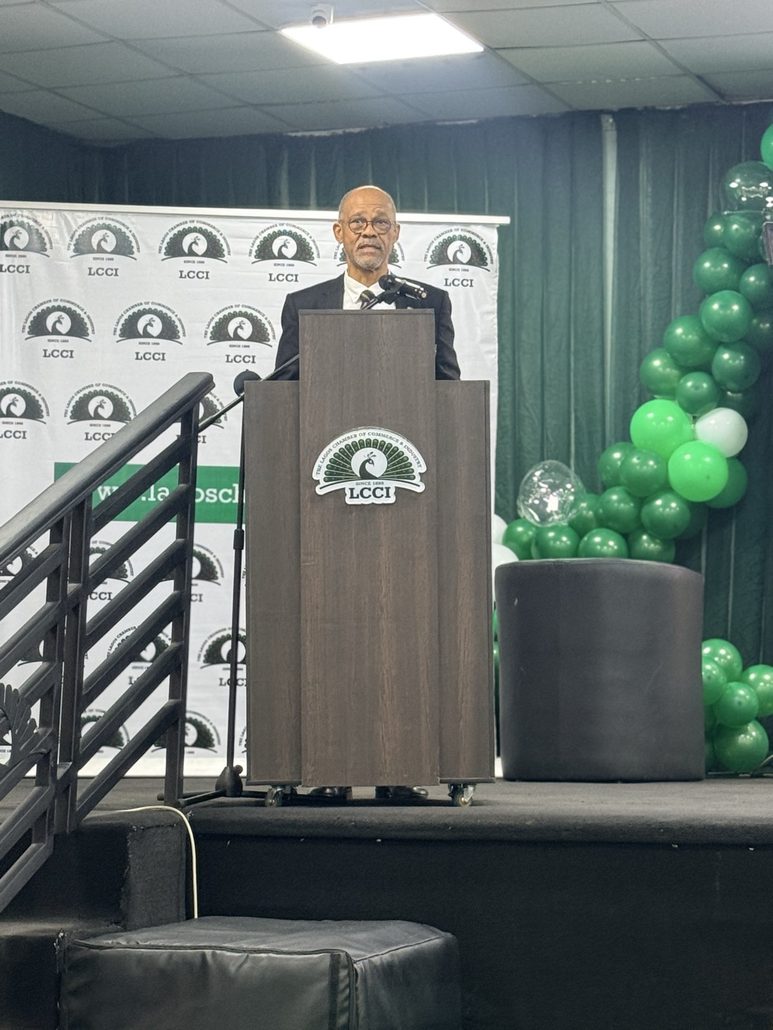
Lagos State Government has said it cannot build and sustain a healthcare system capable of serving a population of about 30 million people through government funding alone, calling for stronger private-sector participation in the state’s health economy.
The state’s Commissioner for Health, Prof. Akin Abayomi, disclosed this in a statement posted on his X page on Tuesday, following his presentation at the Lagos Chamber of Commerce and Industry (LCCI) Medical, Pharmaceuticals and Allied Services Group Symposium.
Abayomi said the funding gap confronting healthcare in a rapidly expanding megacity such as Lagos should not be regarded as a weakness, but as an opportunity to deepen collaboration between government and private investors.
He said the state was developing a broader strategy to attract private capital into healthcare, stressing that investment opportunities extended beyond the construction of hospitals to virtually every segment of the health value chain.
According to him, the Lagos State Medical, Industrial and Investment Zone (LASMIIZO) is being positioned to create investment opportunities in healthcare infrastructure, specialist hospitals, diagnostic services, pharmaceuticals and medical manufacturing.
Other areas identified include pharmacy, health technology, digital health, research and clinical trials, medical education, energy and healthcare supply chains.
Abayomi, however, said attracting private capital would require more than government incentives, stressing the need for a predictable investment environment that would give investors confidence to commit capital over the long term.
He said Lagos was consequently moving away from dependence on what he described as ad hoc subsidies, tax holidays and short-term projects towards more structured financing and partnership models.
He listed risk-sharing arrangements, co-investment, long-term public-private partnerships (PPPs), concessional financing, performance-based contracts and structured demand as mechanisms the state intends to use to encourage sustainable private investment in healthcare.
Under the proposed approach, Abayomi said government would provide policy direction, regulation, standards, infrastructure and equity, while the private sector would contribute capital, technology, expertise and innovation.
He also identified the purchasing power of Nigerians as a critical factor in determining whether private investment in healthcare could be sustained.
The commissioner said more than 70 per cent of healthcare services were provided by the private sector, while more than 70 per cent of healthcare expenditure was paid out of pocket.
He argued that such a system could not support a sustainable healthcare market without mechanisms capable of improving people’s ability to pay for healthcare services.
“Health insurance is therefore central to the strategy,” he said.
Abayomi stressed that the increased reliance on private-sector investment should not be interpreted as government abandoning its responsibility for healthcare delivery.
Rather, he said the strategy was aimed at creating an environment where responsible private investment could expand healthcare capacity while government continued to protect the public interest through effective regulation and oversight.
He urged investors and innovators to take advantage of opportunities in Lagos’ healthcare sector, particularly in areas where the state requires greater capacity.
He called for investment in specialist medical services, diagnostic networks, pharmaceutical and medical-product manufacturing, digital health solutions, research and clinical trials, as well as the training of healthcare professionals.
According to him, such investments could help address healthcare challenges in Lagos while creating solutions capable of serving the wider Nigerian and African markets.
“Build with us,” Abayomi urged investors and innovators, adding that the state needed private-sector partners to help scale up its healthcare platform.
He said Lagos was building the necessary platform for investment and that collaboration with the private sector would be crucial to expanding healthcare capacity in a city whose population and healthcare needs continue to grow.
The commissioner’s position places health insurance and private investment at the centre of Lagos State’s emerging strategy for developing a sustainable health economy, with government focusing on regulation, infrastructure and policy while leveraging private capital and expertise to expand service delivery.