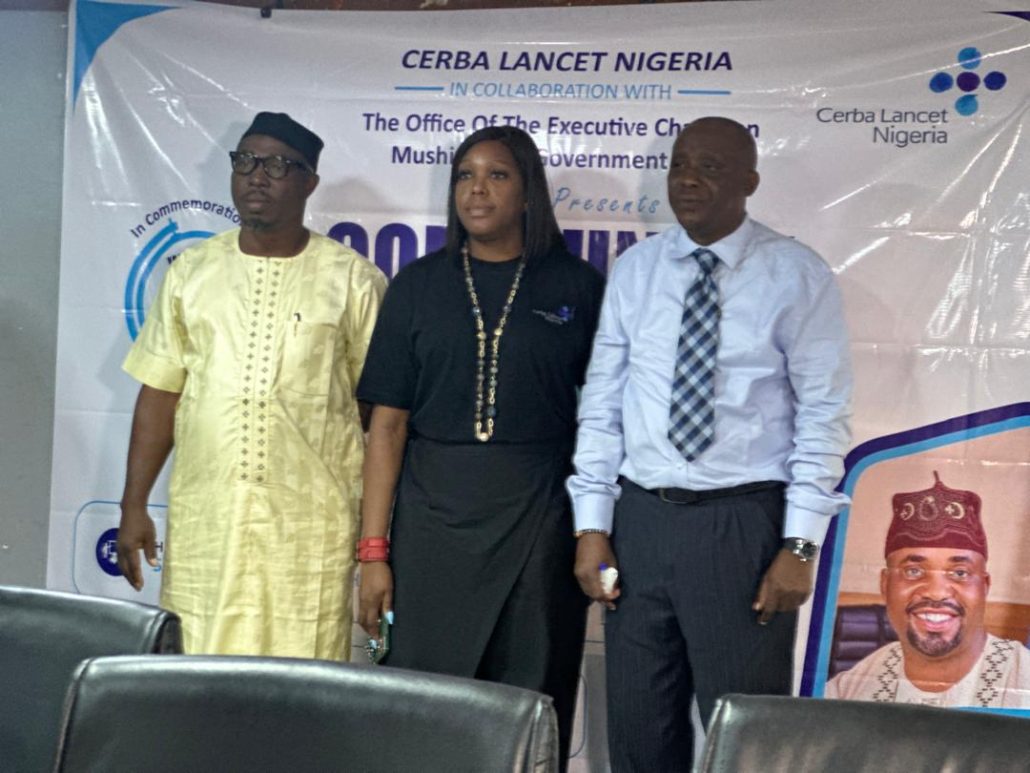
For 247 residents of Mushin, Lagos, a free community health screening offered something more valuable than routine medical checks: the opportunity to know whether they were living with hepatitis B without knowing it.
The turnout at the community screening programme organised by Cerba Lancet Nigeria in partnership with Mushin Local Government Area was higher than the organisers’ initial target of 200 participants.
But beyond the numbers, the exercise exposed a wider public health challenge, the large population of Nigerians who may be living with chronic hepatitis B without knowing their status.
Dr Olayemi Dawodu, Managing Director and Chief Executive Officer of Cerba Lancet Nigeria and an Anatomic and Molecular Pathologist, said an estimated 18.2 million Nigerians were living with chronic hepatitis B.
She also said about 325,000 new hepatitis infections, predominantly hepatitis B, were estimated in 2022, citing the World Health Organisation Regional Office for Africa.
According to her, hepatitis B prevalence in Nigeria is estimated at between eight and nine per cent of the population, making prevention, vaccination, screening and early management critical to reducing the disease burden.
Dawodu spoke during the community health education and free screening programme organised as part of Cerba Lancet’s activities to mark World Hepatitis Day, observed on July 28.
The initiative, held under the company’s Community Connect Corporate Social Responsibility programme, combined hepatitis B screening with health education, medical consultations, blood pressure and weight checks, random blood sugar testing, referrals and distribution of food, drugs and other support materials.
For the organisers, the intervention was designed to move beyond awareness by helping residents establish their hepatitis status and directing those who tested positive to appropriate health facilities for further management.
“What we are doing today is not only about letting them know about their current hepatitis B status,” Dawodu said. “We are also giving them palliatives in terms of food and drugs for those we can support, as well as organising free tests for them.”
She added that residents who tested positive would be referred to secondary healthcare facilities for proper management.
The emphasis on screening reflects one of the difficulties associated with hepatitis B: people can carry the infection without knowing it, allowing the disease to progress before they seek medical attention.
Dawodu urged Nigerians to know their hepatitis status and take advantage of available preventive measures.
“Know your status. Get your hepatitis B status, do the test and know whether you are positive or negative. If you are positive, there is management,” she said.
While hepatitis B is preventable through vaccination, Dawodu said the continued burden of the disease showed that vaccine availability alone was not enough.
She called for stronger advocacy and sustained public education, particularly at community level.
“We still need to do a lot of work in terms of educating the population about this kind of disease and infections, whether it is by vaccination, and if somebody is infected, all the activities to prevent spread from one person to another,” she said.
She specifically advocated health education in local languages, arguing that communities needed to understand how hepatitis B spreads and how infection can be prevented.
Hepatitis B is a viral infection that affects the liver. Dawodu said it could be transmitted through infected blood and body fluids, including through sexual contact, contaminated needles and other sharp objects, as well as from mother to child.
She also distinguished hepatitis B from hepatitis C, noting that although both infections affect the liver and can result in chronic disease, cirrhosis and liver cancer, their modes of transmission differ.
According to her, hepatitis C is primarily associated with blood-to-blood transmission, while hepatitis B can be transmitted through blood, sexual contact and mother-to-child transmission.
The health concern is not limited to infection itself. Dawodu warned that failure to detect and manage hepatitis can have serious long-term consequences.
“The worst long-term complication of untreated hepatitis is development of hepatocellular cancer, cancer of the liver,” she said.
The warning places greater significance on routine screening, particularly for people who may have been exposed to risk factors but have never tested.
At the Mushin programme, Cerba Lancet’s Head of Business Development, Temitope Ambrose, said the location was deliberately chosen because Mushin was where the company began its operations.
He said the area’s proximity to the Lagos University Teaching Hospital, which provides laboratory services, was also considered.
Ambrose said the company had initially planned to screen 200 people but eventually registered 247 participants.
He described the turnout as encouraging, saying it demonstrated the need to take health information and preventive services closer to communities.
For Ambrose, screening is particularly important because many people may not know that they have hepatitis.
He also observed that hepatitis B often receives less public attention than diseases such as HIV and COVID-19, despite its potential to cause severe complications.
He said Cerba Lancet viewed the intervention as part of its broader responsibility as a healthcare laboratory provider to support preventive healthcare rather than merely wait for people to seek medical services after illness develops.
The local government also welcomed the intervention.
The Vice Chairman of Mushin Local Government Area, who supervises health, Hon. Semiu Ishola Karaole, commended Cerba Lancet for bringing free screening and health education to residents.
Karaole said healthcare remained a priority of the council under Chairman Hon. Tunbosun Haruna Aruwe.
He said the turnout demonstrated residents’ interest in health interventions, noting that some participants arrived as early as 7am.
According to him, Mushin has seven Primary Health Care Centres and four functional ambulances, while the council continues to support efforts aimed at improving healthcare delivery.
The Medical Officer of the Local Government, Dr Odufuwa Kayode, also stressed the importance of early screening.
He described hepatitis B as a common viral disease that could become dangerous when left undetected and unmanaged.
Kayode said the disease could affect the liver and have wider consequences for the body, reinforcing the need for residents to seek screening rather than wait until symptoms become severe.
For residents who attended the programme, however, the immediate concern was more personal: knowing their health status.
The screening provided an opportunity for people who might otherwise not have undergone testing to establish whether they were infected and, where necessary, receive referrals for further care.
Residents appreciated the intervention and called for similar exercises to be conducted more regularly across Local Government Areas and Local Council Development Areas in Lagos.
They also urged other healthcare providers and organisations to replicate the model by combining screening with health education and referral services.
The Mushin intervention therefore brought together three elements that are central to hepatitis control: prevention, detection and linkage to care.
Yet the 247 people who participated represent only a small fraction of the population that may require access to screening.
With an estimated 18.2 million Nigerians living with chronic hepatitis B, the challenge extends beyond occasional outreach programmes. It requires sustained public awareness, accessible testing, vaccination, early diagnosis and appropriate management.
The burden also highlights the importance of making health information understandable and accessible at community level.
For Dawodu, this means taking the message beyond conventional health campaigns and communicating in languages people understand.
The message from the Mushin exercise was consequently broader than the provision of free tests.
It demonstrated that when screening is brought closer to communities, residents are willing to participate. The 247 people who showed up, surpassing the original target of 200 , provided evidence of that demand.
The challenge now is to make such opportunities more consistent and widespread.
Hepatitis B may remain silent in many people until complications develop, but the disease does not have to remain invisible.
Vaccination can prevent infection, screening can reveal status, and early management can help prevent progression to serious liver disease.
As Nigeria confronts an estimated 18.2 million chronic hepatitis B infections, the experience in Mushin underlines a simple public health lesson: awareness must lead to action.
For the residents who walked into the screening centre, action began with a test.
For the wider health system, the task is to ensure that knowing one’s status becomes accessible to millions more.