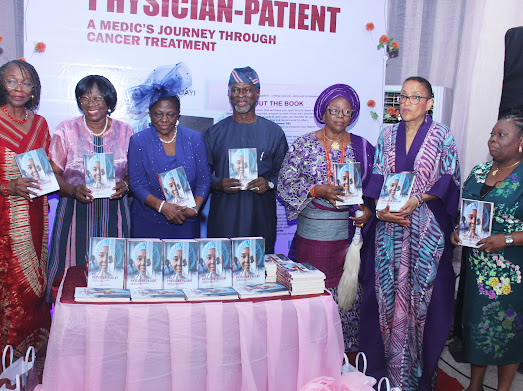
(Prof. Folasade Ogunsola, Prof. Ajayi, Deaconess Ayo, MD/CEO Triumph power and Gas System, Limited, Mr Bolaji Ososami, Olori Comfort Olayinka Kiladejo of Ondo Kingdom, Mrs Simon-Hart and the Publisher Inspiration House Publishing, Ibadan, Mrs Olufunsho OmololaBalepo)
A book documenting the cancer journey of the late Dr. Adenike Adeniran was on Tuesday presented in Lagos, with medical experts and stakeholders calling for stronger empathy and more humane care in Nigeria’s cancer treatment system.
The event, held at the Sickle Cell Centre, Idi-Araba, Lagos, featured the public presentation of The Physician-Patient: A Medic’s Journey Through Cancer Treatment, co-authored by Prof. IkeOluwapo Ajayi of the University of Ibadan and the late physician before her death in March 2024.
The occasion brought together medical professionals, academics, policymakers, cancer survivors and family members, who reflected on Dr. Adeniran’s experience as both a physician and a cancer patient, describing it as a powerful case for patient-centred care.
Participants said the book highlights the gap between clinical treatment and the emotional realities of illness, particularly in cancer care, where patients often struggle with fear, stigma and financial burden.
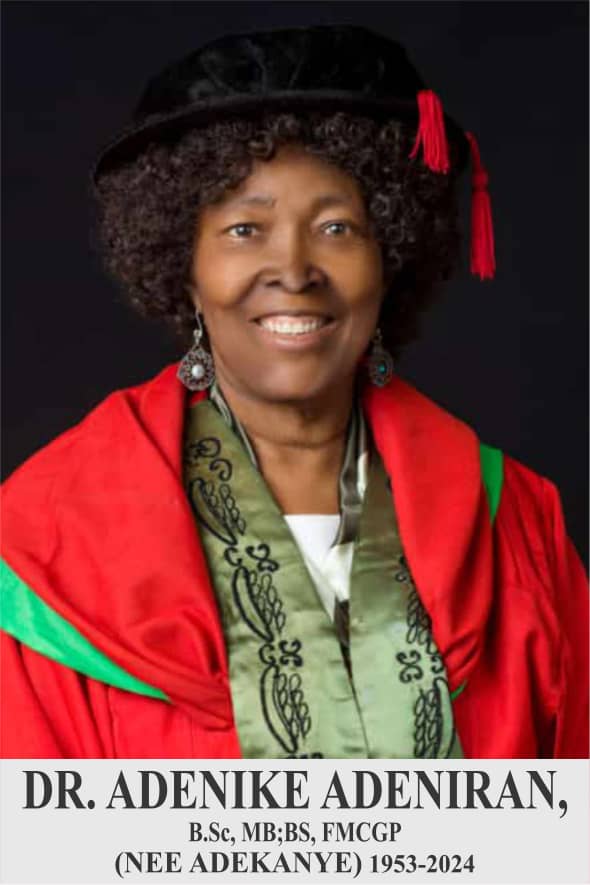
Speaking at the event, co-author Prof. Ajayi said the book was written to bridge the gap between medical science and lived experience, stressing that illness cannot be fully understood through clinical descriptions alone.
She said the work presents cancer as both a medical condition and a deeply human experience that affects identity, relationships and emotional wellbeing.
“When a physician becomes a patient, medicine finds its truest mirror,” she said, adding that the book is relevant to doctors, patients, caregivers and policymakers.
According to her, the publication exposes gaps in healthcare delivery where emotional care is often overlooked in favour of clinical intervention.
She noted that while medicine explains disease in scientific terms, it does not fully capture the fear, anxiety and uncertainty patients experience.
Prof. Ajayi also said the writing process required balancing clinical precision with human emotion, describing it as both challenging and rewarding.
She quoted Dr. Adeniran, who wrote before her death that documenting her illness was both therapeutic and purposeful, and a way of teaching doctors to approach care with empathy and sensitivity.
Chairman of the occasion and Pro-Chancellor of Bowen University, Deaconess Joan Olatoyosi Ayo, said the late physician’s work continues to speak beyond her lifetime.
She expressed sadness that Dr. Adeniran was not alive to witness the public presentation of her book.
“It is only fair for me to start this speech on a sad note. The lady who started this project is not here today to see it being launched. Dr. Adenike has gone to bed with the Lord,” she said.
She, however, noted that the book represents a lasting contribution to medicine and a reminder of the importance of compassion in healthcare.
A reviewer of the book and cancer survivor, Mrs. Abigail Simon-Hart, drew attention to the financial and emotional burden of cancer treatment, describing it as a major challenge for many families.
She said some patients are pushed into debt and unable to meet basic family needs due to the high cost of treatment.
“Cancer can make people broke. Families go into debt because treatment is expensive,” she said.
She added that beyond financial strain, patients also face psychological distress linked to uncertainty and mortality.
The event also featured a panel discussion titled “Cancer Care: Let the Truth Be Said,” moderated by Dr. Adetayo Adebayo.
Panelists from the African Palliative Care Association, LUTH Cancer Centre, Niola Cancer Care Foundation and other health organisations discussed challenges in cancer care across Africa.
They identified late diagnosis, poor awareness, inadequate access to treatment and limited psychosocial support as key barriers affecting patient outcomes.
Experts at the session called for stronger investment in early detection, public awareness campaigns and palliative care services.
They also urged healthcare providers to adopt a more holistic approach that integrates empathy, communication and emotional support into clinical care.
A key message from the discussions was that effective cancer management requires more than drugs and medical technology, but also attention to patients’ emotional and psychological needs.
The event ended with renewed calls for reforms in cancer care delivery in Nigeria and a stronger commitment to patient-centred healthcare practices.
Speakers agreed that Dr. Adeniran’s story continues to serve as a reminder that medicine must balance science with humanity, ensuring that patients are treated not only for their illness but also with dignity and compassion.