Gender justice advocates and reproductive health experts have called for menstrual health and dignity to be recognised as a fundamental human rights issue, warning that millions of women and girls worldwide continue to face discrimination, exclusion and worsening period poverty amid economic hardship, climate disasters and humanitarian crises.
The call was made during a virtual SHE & Rights session commemorating the International Day of Action for Women’s Health and Menstrual Hygiene. The event was organised by the Women’s Global Network for Reproductive Rights (WGNRR) and Citizen News Service (CNS) in partnership with several international health and gender rights organisations.
Speakers at the forum stressed that menstruation should no longer be treated as a private issue or merely a matter of access to sanitary products, but as a broader issue involving dignity, equality, freedom and non-discrimination.
Founder of the Global South Coalition for Dignified Menstruation, Radha Paudel, said menstrual discrimination remains deeply entrenched across societies and contributes to unequal power relations and gender exclusion.
According to her, policies and programmes often fail to recognise the diverse experiences and needs of menstruating people, particularly those living with disabilities, members of LGBTQI communities and people affected by conflicts, natural disasters and displacement.
“Dignified menstruation is rooted in the right to dignity, freedom, equality and non-discrimination. Whether menstruating persons are in refugee camps, evacuation centres or disaster relief camps, their needs and priorities must be recognised and addressed,” Paudel said.
She argued that menstrual discrimination extends beyond social stigma and includes silence, restrictions, deprivation of resources, denial of services and various forms of abuse experienced by menstruators throughout their lives.
Paudel also urged governments, development agencies and advocates to rethink the language commonly used around menstruation.
She criticised the widespread use of the term “sanitary pad,” arguing that it wrongly implies menstrual blood is unclean.
“I prefer the term menstrual pad because menstrual blood is not dirty. Menstruation is life-affirming and should never be viewed as a source of shame or impurity,” she said.
The advocates noted that the growing global cost-of-living crisis is worsening period poverty, forcing many families to choose between purchasing menstrual products and meeting basic needs such as food, fuel and medicine.
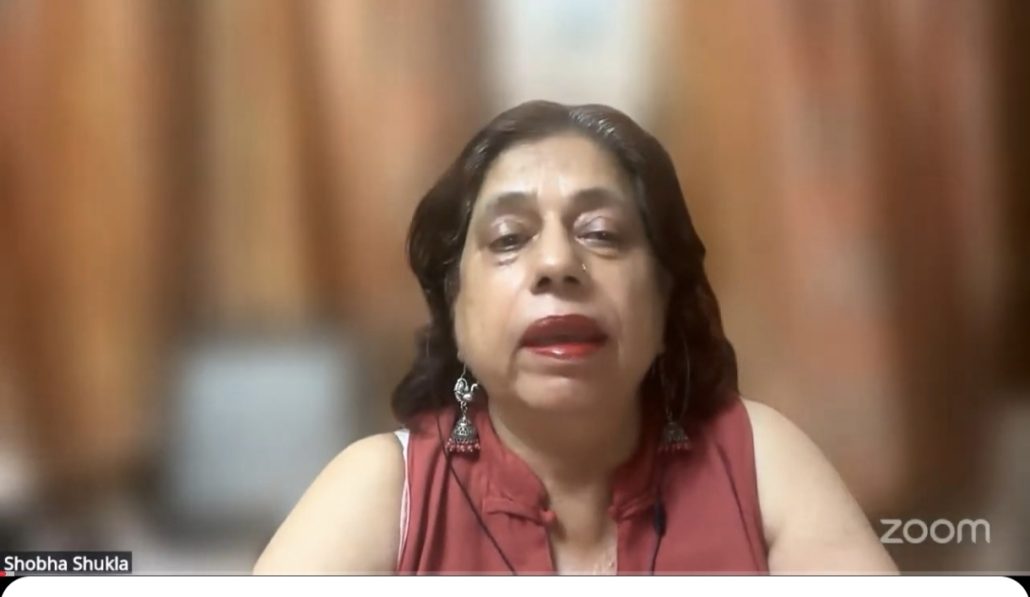
Coordinator and host of the SHE & Rights campaign, Shobha Shukla, said more than 500 million people globally experience period poverty every month, a situation exacerbated by inflation, climate-induced disasters, supply chain disruptions and persistent poverty.
“We are living through overlapping crises that have transformed menstrual hygiene from a basic healthcare right into an impossible financial choice for many households,” Shukla said.
She warned that the current global environment, marked by increasing resistance to gender rights and shrinking support for reproductive health programmes, is making efforts to achieve menstrual equity more difficult.
Across several countries, advocates reported that climate-related disasters and emergencies continue to expose the neglect of menstrual health needs during humanitarian responses.
Programme Officer of WGNRR, Joie Cortina, recounted how women and girls displaced by fires in informal settlements in the Philippines identified underwear among their most urgent needs, highlighting the often-overlooked realities faced by menstruating persons during emergencies.
“When people lose everything in a disaster, maintaining dignity becomes a major concern. Menstrual needs are often ignored despite their importance to health and wellbeing,” she said.
Similar concerns were raised by Indonesian gender and health justice advocate Rita Widiadana, who said women and girls in disaster-prone areas frequently lose access to clean water, privacy and menstrual products during floods, earthquakes and conflicts.
She noted that inflation has made menstrual products increasingly unaffordable for low-income households, leaving many women and girls vulnerable to health complications and indignity.
“Relief agencies often focus only on food, water and medicines while overlooking menstrual products, even though they are essential items,” Widiadana said.
The situation is equally concerning in Africa, according to President of the African Youth and Adolescent Network East and Southern Africa (AfriYAN ESA), Angel Babirye.
Babirye said rising prices of menstrual products have placed enormous pressure on households, forcing some girls and women to extend the use of sanitary materials beyond recommended periods or resort to unsafe alternatives.
She warned that such practices increase the
risk of reproductive tract infections and other health complications.
“Many families are forced to decide whether to buy food or menstrual products. Girls often miss school when they cannot access menstrual supplies, and some are compelled to use unsafe substitutes that threaten their health,” Babirye said.
The advocates called on governments to integrate menstrual health into disaster preparedness and humanitarian response plans rather than treating it as an afterthought.
They emphasised the need for adequate access to menstrual products, clean water, safe sanitation facilities, privacy, menstrual education and broader public awareness involving both women and men.
Beyond menstrual health, participants also welcomed the recent decision by the International PCOS Network and The Lancet to rename Polycystic Ovary Syndrome (PCOS) as Polyendocrine Metabolic Ovarian Syndrome (PMOS).
The change, announced in May 2026, reflects growing recognition that the condition is not solely an ovarian disorder but a complex hormonal and metabolic syndrome affecting multiple body systems.
Shukla described the renaming as a significant step towards improving understanding of a condition that affects approximately one in eight women globally.
“The previous name focused narrowly on ovarian cysts and failed to capture the broader metabolic and endocrine nature of the disorder,” she said.
Cortina added that the rebranding reflects a wider effort to centre women’s lived experiences in medical science and health policy.
She said recognising PMOS as a systemic condition could help improve diagnosis, treatment and public understanding while advancing more holistic approaches to women’s health.
The advocates concluded that achieving menstrual dignity requires more than distributing menstrual products.
They called for systemic reforms that address discrimination, poverty, social stigma and exclusion, while ensuring that menstrual health is recognised as an essential component of sexual and reproductive health
and rights.
They argued that a truly period-friendly world can only be achieved when menstruation is treated as a matter of human dignity, health and social justice rather than an issue hidden by shame and silence.