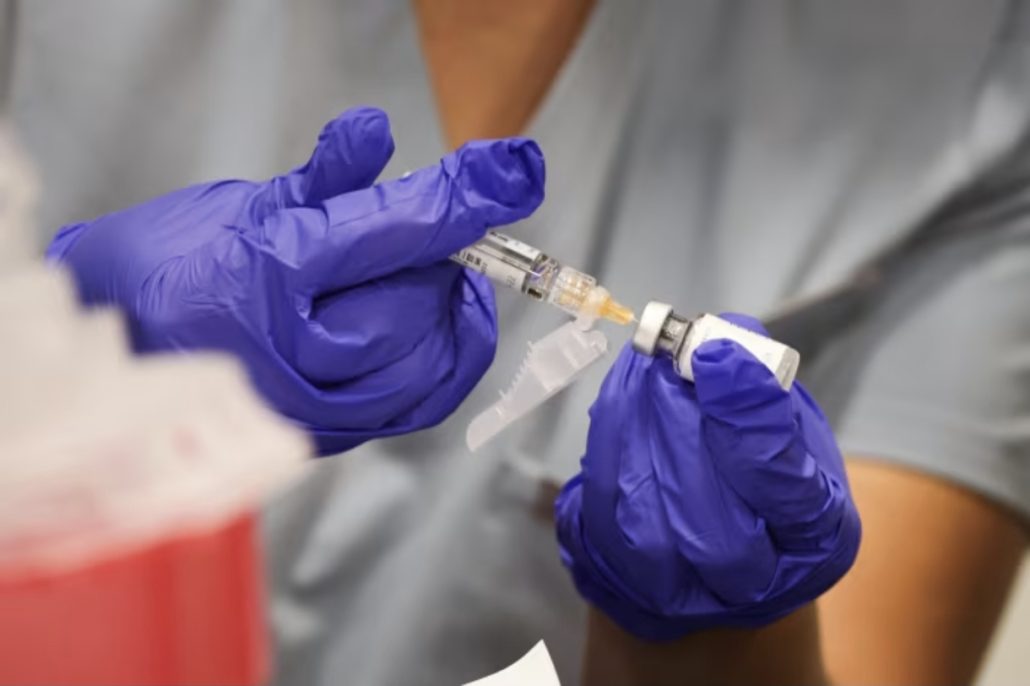
Public health experts have raised the alarm after the United States sharply reduced the number of vaccines recommended for all children, warning that the move could weaken protection against several preventable diseases and reverse decades of progress in child health.
Under the new guidance issued by the Centers for Disease Control and Prevention (CDC), routine childhood vaccination will now cover 11 diseases, down from a broader schedule that previously included influenza, rotavirus, hepatitis A and B, certain forms of meningitis, and respiratory syncytial virus (RSV).
The removed vaccines will be offered only to children deemed high-risk or through what officials described as “shared decision-making” between families and doctors.
The overhaul, requested by President Donald Trump in December and long championed by Health Secretary Robert F. Kennedy Jr., has been defended by the administration as a trust-building exercise. The Department of Health and Human Services (HHS) said a review of 20 peer nations showed the US to be an “outlier” in the number of vaccines recommended for all children.
“This decision protects children, respects families, and rebuilds trust in public health,” Kennedy said in a statement. Trump, writing on his Truth Social platform, described the new schedule as “far more reasonable” and said it aligns the US with other developed countries.
Officials also insisted that families who want the vaccines will still have access and that insurance coverage will remain.
Vaccines that remain broadly recommended include those against measles, whooping cough, polio, tetanus, chickenpox and human papillomavirus (HPV).
However, the guidance also cuts HPV vaccination to a single dose for most children, down from the previous two or three shots depending on age.
Medical groups and public health specialists have condemned the changes, arguing that they were introduced without transparent scientific review or public consultation.
According to the Vaccine Integrity Project at the University of Minnesota, Michael Osterholm, “Abandoning recommendations for vaccines that prevent influenza, hepatitis and rotavirus, and changing the HPV recommendation without a public process to weigh risks and benefits, will lead to more hospitalisations and preventable deaths among American children.”
The American Academy of Pediatrics echoed the concerns, warning that the policy ignores disease patterns within the US. “You can’t just copy and paste public health, and that’s what they seem to be doing here,” said Dr Sean O’Leary.
The American Medical Association also faulted the process. “Changes of this magnitude require careful review, expert and public input, and clear scientific justification. That level of rigour and transparency was not part of this decision,” said its president, Dr Sandra Fryhofer.
In response, paediatricians have issued their own vaccine schedule, continuing to recommend shots dropped by the administration. O’Leary singled out the flu vaccine, noting that 280 children died from influenza last winter, the highest number since 2009.
Senior HHS officials, speaking anonymously, disclosed that the revised recommendations were developed by political appointees and not reviewed by the CDC’s advisory committee. Scientists within the agency were reportedly restricted to presenting international comparisons and barred from making recommendations.
The decision comes at a sensitive time, with US vaccination rates falling, exemption requests at record highs, and cases of measles and whooping cough on the rise. France, for instance, currently recommends vaccination against 14 diseases, compared with the 11 now advised in the US.
Kennedy, a long-time vaccine sceptic, has previously directed the CDC to drop COVID-19 vaccine recommendations for healthy children and pregnant women, disbanded its advisory committee, and ordered changes to its stance on vaccines and autism without new evidence, moves that continue to fuel debate over the future of public health policy in the United States.