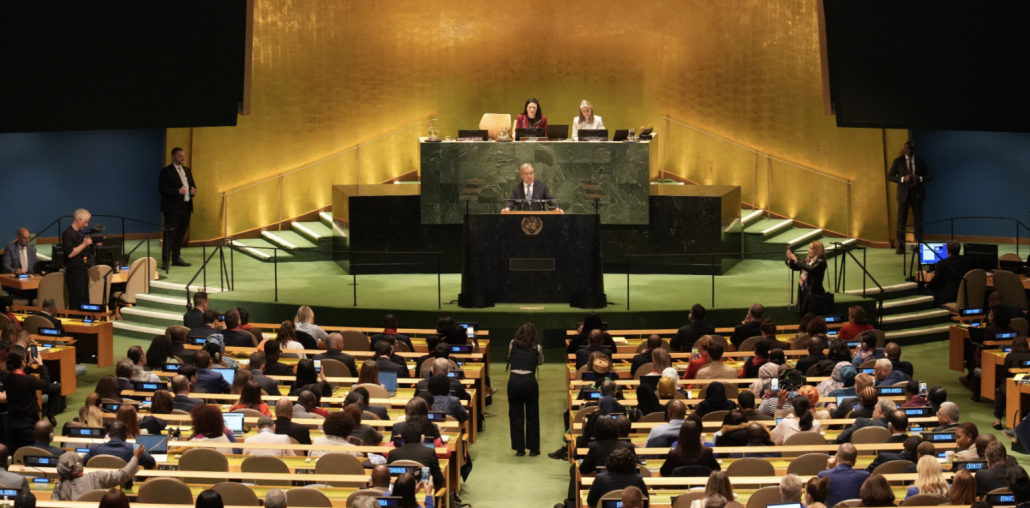
CSW chair Maritza Chan Valverde from Costa Rica, and UN Secretary General Antonio Guterrez at the 70th session of the commission. (Photo by Health Policy Watch)
Nigeria has called for broader consultations and consensus-building following a contentious vote at the United Nations Commission on the Status of Women (CSW), where the United States emerged as the only country to oppose a key global women’s rights document.
At the session held at the United Nations headquarters in New York, 37 member states voted in favour of adopting the “agreed conclusions,” while six countries, including Egypt, Mali and Saudi Arabia, abstained.
Nigeria, alongside Egypt, had earlier urged more time for negotiations in line with the CSW’s long-standing tradition of adopting decisions by consensus.
The move to proceed with a vote, breaking a 70-year precedent, highlighted growing divisions among member states on issues surrounding gender equality and women’s rights.
The United States had pushed for the removal of what it described as “controversial social issues” from the document, including language related to gender identity, sexual and reproductive health, and regulation of artificial intelligence. After its proposals failed, it cast the lone “no” vote.
For Nigeria, the emphasis remained on dialogue rather than division. Diplomats argued that consensus is critical in advancing global commitments, particularly on sensitive issues affecting women and girls across diverse cultural and legal systems.
The adopted document focuses on improving access to justice for women and girls, especially survivors of gender-based violence.
It calls for stronger legal frameworks, better data systems, and the integration of gender-responsive approaches across justice sectors. It also recognises the role of community-based actors and introduces new considerations around digital justice and the governance of artificial intelligence.
Speaking during the session, officials stressed that such measures are vital for countries like Nigeria, where gender-based violence and barriers to justice remain significant concerns despite ongoing reforms.
The debate also reflects broader global tensions. Stakeholders noted that disagreements among powerful nations could slow progress on gender equality, even as developing countries continue to grapple with real-world challenges such as child marriage, limited legal access, and underrepresentation of women in leadership.
Observers say Nigeria’s position underscores a balancing act,supporting the advancement of women’s rights while advocating inclusive decision-making that reflects different national contexts.
As discussions on gender equality evolve globally, Nigeria’s call for consensus may prove crucial in ensuring that international agreements translate into practical, culturally relevant solutions for women and girls at home.