Five African countries have hit the 2025 Malaria Reduction Target with Nigeria missing on the list, a survey from Africa Malaria Progress Report 2035 has said.
While Cape Verde, Algeria, Botswana, Eritrea, and Rwanda met the 2025 Catalytic Framework target of reducing malaria incidence or deaths by 75 per cent, Nigeria was notably missing from the list, the report revealed.
The report was unveiled over the weekend at the 39th African Union Summit in Addis Ababa, Ethiopia, where Heads of State and Government urged a new era of sustainable malaria financing.
It revealed that progress against the disease has stalled across the continent.
There, leaders raised alarm over a deepening funding crisis that could reverse decades of progress against malaria.
They warned that the current financial shortfall is putting years of hard-won gains at serious risk across the continent.
The report also warned that rising threats, combined with weakening financial support, are increasing the risk of a malaria resurgence, prompting leaders to push for urgent, coordinated, and long-term investment to protect past gains and accelerate progress toward elimination.
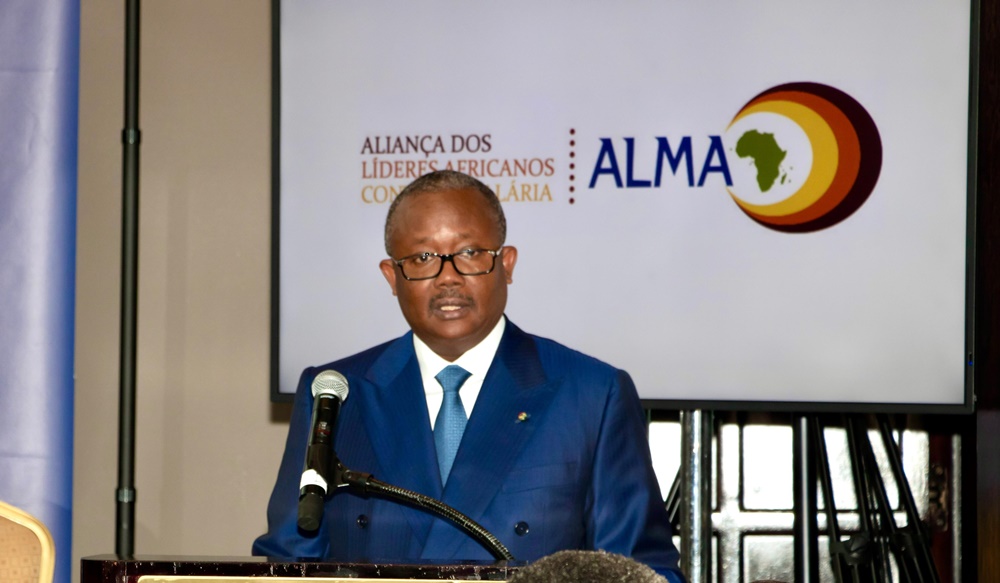
Presented by the Chair of the African Leaders Malaria Alliance, Mr Duma Gideon Boko, the report revealed that Africa recorded 270.8 million malaria cases and 594,119 deaths in 2024, accounting for about 96–97 per cent of the global burden.
According to the report, malaria progress has stagnated since 2015, with only five African Union member states meeting the 2025 Catalytic Framework target of reducing malaria incidence or deaths by 75 per cent.
More troubling, the report warned that a 30 per cent funding reduction would result in, 640 million fewer insecticide-treated nets, 146 million additional malaria cases, 397,000 additional deaths, mostly children under five and $37 billion loss to Africa’s GDP by 2030.
Without urgent intervention, malaria cases could exceed 400 million annually, with deaths rising beyond one million each year.
Boko described the situation as a “perfect storm,” noting that development assistance for health in Africa has dropped sharply in recent years, while global funding efforts have fallen short.
He warned that the continent must not allow financial constraints to undo decades of progress that prevented 1.64 billion cases and saved 12.4 million lives since 2000.
In response, African leaders pledged to strengthen domestic resource mobilisation, expand innovative financing, and build sustainable national health funding systems.
The report showed that End Malaria Councils and Funds in 12 countries have mobilised over $200 million through public-private partnerships, highlighting growing African-led investment.
Leaders emphasised that broader collaboration involving the private sector, philanthropists, and the African diaspora is critical to closing funding gaps and sustaining malaria elimination efforts.
They also called on global partners to honour their commitments and renew the World Bank Malaria Booster Programme, which previously invested over $1 billion between 2005 and 2010 with significant impact.
Despite the funding challenges, the report highlighted progress in deploying new malaria tools.
The report noted significant progress in the deployment of new malaria prevention tools across Africa in 2025.
It stated that 74 per cent of mosquito nets distributed were next-generation dual active-ingredient nets, which are far more effective against insecticide-resistant mosquitoes.
It added that 24 African countries introduced World Health Organization-approved malaria vaccines for children under five, with 28.3 million doses distributed during the year, nearly three times higher than the previous year.
In addition, the report said two spatial repellent products were approved in 2025, marking the first new vector-control tools introduced in decades, while 22 countries planned to implement seasonal malaria chemoprevention programmes as part of efforts to strengthen prevention and reduce malaria burden across the continent.
Samia Suluhu Hassan highlighted the role of
African research, noting Tanzania’s investment in advanced malaria science, including gene-drive technology aimed at preventing mosquitoes from transmitting the parasite.
She described the work as African-led innovation solving an African challenge.
Leaders also stressed the importance of reducing Africa’s dependence on imported medicines and vaccines. Currently, the continent imports 99 per cent of vaccines and 95 per cent of medicines.
The report noted that Nigeria has begun partnerships to locally produce antimalarial drugs, rapid diagnostic tests, and potentially Africa’s first next-generation mosquito nets.
The African Medicines Agency, now ratified by 31 countries, is helping harmonise regulations to speed up approval of new malaria tools across Africa.
African leaders urged all governments to treat malaria elimination as central to economic growth and health sovereignty, calling for stronger domestic investment and sustained global support.
Michael Adekunle Charles of the RBM Partnership to End Malaria said full funding and deployment of existing tools could save more than 13 million lives and generate over $140 billion in economic gains over the next 15 years.
He added that every dollar invested in malaria delivers significant economic returns.
While leaders acknowledged the road ahead is difficult, they expressed confidence that sustained political commitment, stronger financing, scientific innovation, and community-driven action can still bend the malaria curve toward elimination.