…adopts science-driven health policies
Lagos State has recorded a major shift in healthcare delivery, reducing malaria misdiagnosis in public health facilities from about 60 per cent to five per cent through the use of scientific diagnostic tools and data-driven reforms.
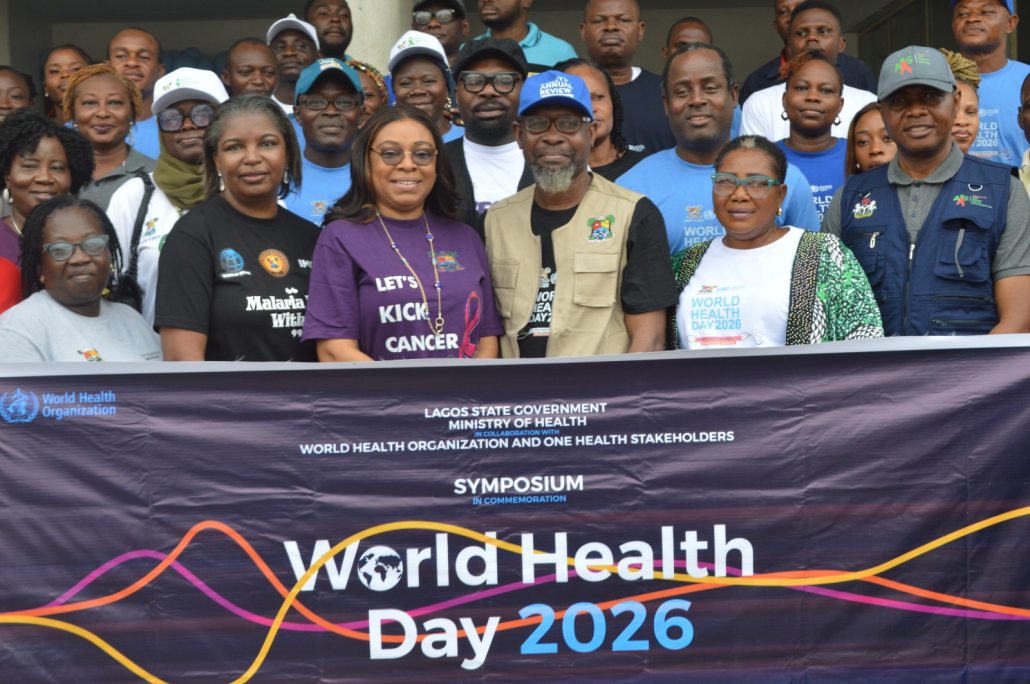
The State Commissioner for Health, Prof. Akin Abayomi, disclosed this on Tuesday at a high-level symposium held at the Adeyemi Bero Auditorium, Alausa, to mark World Health Day 2026.
Abayomi said the introduction of rapid diagnostic testing had revealed that most fever cases previously treated as malaria were not actually caused by the disease, a development he said is reshaping treatment protocols and improving patient outcomes.
According to him, the State is deliberately shifting from assumption-based treatment to evidence-based healthcare, where policies and clinical decisions are guided by research,
surveillance and real-time data.
He said: “We are building a system that is
proactive, predictive and resilient. What we are seeing now is that most fevers are not malaria, and this is changing how we diagnose and treat patients.”
The Commissioner explained that the reform is part of a broader strategy to strengthen the health system through science, innovation and technology.
He added that Lagos is expanding its digital health infrastructure, including smart data platforms, to improve patient care, disease tracking and decision-making across facilities.
Abayomi also said the State is investing in health infrastructure, including specialist hospitals, modern primary healthcare centres and research institutions, to support advanced medical practice.
He noted that efforts are ongoing to expand health insurance coverage and increase health spending, with the State targeting nearly 15 per cent of its budget for the health
sector in line with the Abuja Declaration.
In her remarks, the Special Adviser to the Governor on Health, Dr. Kemi Ogunyemi, said the State is also pushing for mandatory health insurance as part of efforts to achieve universal health coverage.
She stressed the need for stronger collaboration across sectors, noting that diseases such as malaria, HIV and malnutrition require coordinated responses.
Ogunyemi said the government is also strengthening emergency response systems and investing in digital health platforms to improve access to quality care.
Permanent Secretary in the Ministry of Health, Dayo Lajide, said the symposium highlighted the importance of the One Health approach, which recognises the link between human, animal and environmental health.
She said stakeholders were brought together to enhance collaboration and develop strategies to tackle emerging health challenges.
Also speaking, the Permanent Secretary, Ministry of Environment and Water Resources, Dr. Omobolaji Gaji, warned against working in silos, noting that environmental factors such as pollution and poor waste management contribute significantly to disease burden.
The State Coordinator of the World Health Organisation, Dr. Chinyere Okafor, called for increased investment in research and innovation, as well as stronger international collaboration to support science-driven health solutions.
Participants at the event agreed that investing in science, strengthening partnerships and tackling misinformation are critical to building a resilient health system.
The symposium ended with a renewed commitment by stakeholders to ensure that scientific evidence remains central to health policy and practice in Lagos State.