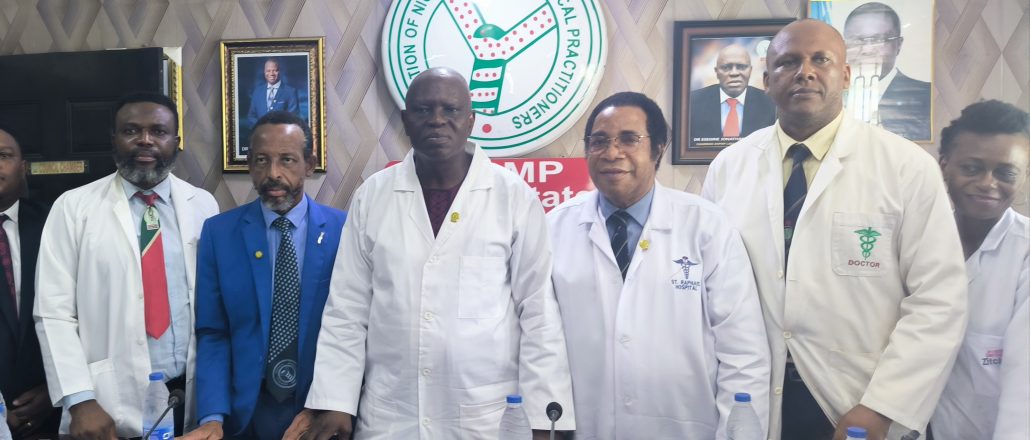
Doctors in Lagos have raised alarm over rising police harassment, arrests, and extortion, warning that the trend is pushing practitioners into defensive medicine and putting patients at risk. They are calling for urgent action, insisting that complaints against doctors be handled through proper channels such as the Medical and Dental Council of Nigeria to protect both healthcare workers and lives. Chinyere Okoroafor reports.
A pregnant woman was knocked down by a Danfo driver who fled the scene. She was rushed into a nearby clinic with severe head injury, but despite efforts to resuscitate her, she died.
What followed, according to the Chairman of the Association of Nigeria Private Medical Practitioners (ANPMP) Lagos chapter, Dr Esegine Jonathan, was not a routine investigation into a road traffic death. Instead, the attending doctor was allegedly stripped and detained after the patient’s mother reported the case to the police. He was later released after negotiations involving colleagues and family members, but only after what the association described as intense pressure and financial settlement.
In another case, a pregnant patient with signs of malaria and hypoglycaemia, and a known history of domestic abuse, was brought to a hospital in a critical condition. Despite medical advice, her husband initially refused admission and later took her home. She returned the next morning, dead. Her relatives reported the case to the police, leading to the arrest and detention of the doctor and nurses on duty. The doctor was later released after paying ₦500,000, with additional payments reportedly made to secure the release of other staff and cover autopsy-related demands.
Both cases, cited by the association chairman, at a joint press conference on Tuesday with the Nigerian Medical Association (NMA), Lagos State chapter, are among several examples doctors say illustrate a growing pattern of harassment, arrests, extortion by law enforcement, intimidation that is now reshaping how emergency care is delivered in Lagos hospitals.
A trend they warn could endanger patients and weaken an already strained healthcare system.
At a joint press briefing in Lagos on Tuesday, the ANPMP and the Nigerian Medical Association (NMA), Lagos State chapter, painted a troubling picture of a profession under siege.
Dr Jonathan, said the experiences of doctors across private hospitals now follow a disturbing pattern of arrest first, investigate later.
He warned that the consequences may go far beyond the medical profession.
“A doctor who is constantly harassed, intimidated, detained and extorted would be robbed of the bravery which most medical emergencies require. If this trend continues, the result will be more preventable deaths.” he said.
According to him, many doctors are already beginning to adopt what is known as defensive medicine, avoiding high-risk cases or delaying intervention for fear of being blamed if a patient dies.
In one case cited, a doctor who performed an appendectomy in July 2025 was arrested after complications arose during recovery. While still managing the patient, police were invited by relatives. The doctor was detained and allegedly forced to pay ₦500,000 to secure his release.
In another instance, a two-year-old patient died during treatment. The attending doctor and nurse were arrested, detained, and subjected to what colleagues described as “negotiation,” which reportedly began at ₦3 million and ended at ₦600,000, paid through POS operators allegedly arranged at the station.
“There is now what looks like an industry around this, Dr Jonathan said, referring to the use of POS machines during such settlements.
In yet another case, a young locum doctor who treated an unconscious five-year-old patient was later accused of manslaughter after the child died hours after referral. He reportedly paid ₦1.5 million to regain his freedom.
Perhaps the most striking case involved the two children whose deaths triggered the detention of a young medical officer and a nurse at St. Edwards Hospital. The children, aged two and five, were brought in with severe gastroenteritis, sepsis, and dehydration. Despite resuscitation efforts, the younger child died after nearly three hours.
The older child was referred but died in transit. The caregiver reported the case to the police, alleging that the drugs administered caused the deaths. Although the medical team initially honoured police invitations and gave statements, they were later detained at Panti police station from March 31 through the Easter period.
Jonathan said the doctor was “bullied, intimidated, and made to sit on the bare floor,” while efforts by professional bodies to secure their release failed for days.
“They did not plot to kill anyone. Their only offence was responding to an emergency and trying to save lives,” he said.
The hospital management, he added, spent about ₦2.3 million before the doctor and nurse were eventually released.
Beyond the personal toll on doctors, the association said such incidents often lead to temporary closure of affected hospitals, cutting off access to care for surrounding communities.
In several cases, entire facilities were reportedly shut for days while doctors remained in detention or under investigation.
For patients, the implications are serious.
In a city like Lagos, where healthcare resources are already stretched, delays in emergency care or refusal to take critical cases could mean the difference between life and death.
Chairman of NMA, Lagos State, Dr. Babajide Kehinde Saheed, described the trend as “alarming and unacceptable.”
“Doctors must be held accountable through due process, not through harassment, intimidation, or trial by public opinion,” he said.
He acknowledged that patients and families have the right to seek redress in cases of suspected negligence but stressed that such complaints must follow established channels.
The Medical and Dental Council of Nigeria, he noted, remains the statutory body responsible for regulating medical practice and disciplining erring practitioners.
Other channels include hospital management and professional bodies like the NMA.
“What we cannot continue to accept is a culture where doctors are subjected to arbitrary arrests and institutional intimidation without recourse to proper legal and professional processes,” Saheed added.
He warned that the consequences of such actions extend beyond doctors.
“An injury to one doctor is an injury to the entire healthcare system,” he said.
Nigeria’s healthcare system is already grappling with multiple challenges, including a shortage of medical personnel driven by migration, limited infrastructure, and rising patient demand.
Doctors noted that the added pressure of harassment could worsen the situation.
“No doctor goes to work with the intention to harm a patient. The first duty of every medical practitioner is to save life, relieve suffering, and restore health.” Saheed said.
The ten cases presented all involved the Nigeria Police Force, particularly the State Criminal Investigation Department (SCID) in Panti.
Doctors allege a pattern of arrests, prolonged detention, and financial demands before release.
Reacting, the Lagos State Police Command’s Public Relations Officer, Abimbola Adebisi, described the allegations involving officers at Panti as serious, assuring that the Command would investigate the matter and revert accordingly.
However, she had yet to provide further details as of the time of filing this report.
Medical professionals were quick to acknowledge the pain of families who lost loved ones during treatment. Saheed expressed condolences to affected families, noting that “every loss of life is deeply felt” within the profession.
However, he stressed that grief must not override due process. “When such complaints relate to medical issues, there are established pathways to ensure fairness, professionalism, and accountability,” he said.