Health experts have warned that efforts to curb Antimicrobial Resistance (AMR) may fail unless governments tackle Gender-Based Violence (GBV), which they say increases women’s risk of infections and limits access to timely treatment.
They also stressed that the growing global health threat is closely linked to social inequalities, particularly gender inequality.
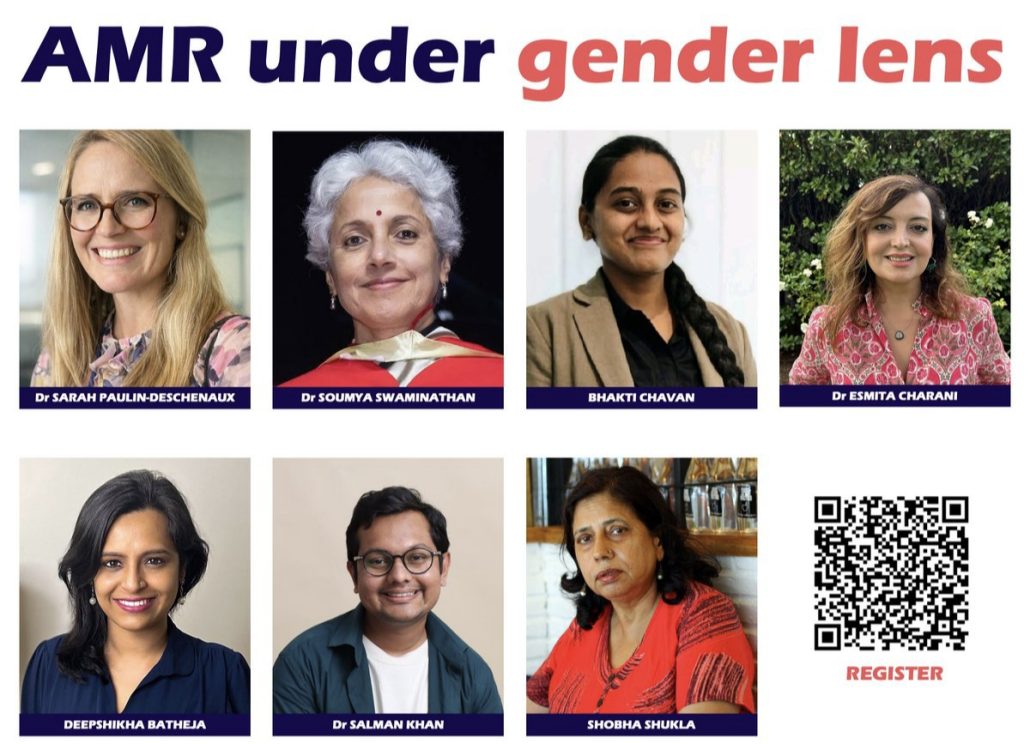
The experts spoke at a virtual global media roundtable on AMR held under the theme: “Gender Lens.” and hosted by the Global AMR Media Alliance (GAMA).
AMR occurs when bacteria, viruses, fungi and parasites stop responding to medicines, largely due to misuse and overuse of antimicrobial drugs in human health, livestock production, agriculture and the environment.
According to the experts, a complex mix of biological, social, cultural and economic factors arising from gender discrimination often weakens infection prevention and control efforts.
They noted that harmful gender norms and stereotypes have normalised the neglect of the wellbeing of women and girls, making them more vulnerable to infections and drug-resistant diseases.
Former Deputy Director-General for Programmes and Chief Scientist at the World Health Organization, Soumya Swaminathan, said reducing AMR would be difficult without confronting violence against women.
Swaminathan noted that women face a high risk of intimate partner violence and domestic abuse, which could expose them to infections that require antibiotic treatment.
“Women are at a very high risk of intimate partner violence or domestic violence, physical or sexual. This could lead to more infections,” she said.
She explained that due to their position in households and communities, many women are less likely to seek timely medical care for injuries or infections.
This, she said, could lead to untreated or poorly treated infections that eventually become drug resistant.
Swaminathan added that infections such as sexually transmitted infections, urinary tract infections, reproductive tract infections and pelvic inflammatory disease are often linked to sexual violence and increased antibiotic use.
She also noted that incomplete treatment, wrong doses or poor follow-up care further increase the risk of drug resistance.
Women facing unintended pregnancies and resorting to unsafe abortions may also be at higher risk of infections that require antibiotics, she added.
Stigma surrounding some diseases also contributes to the AMR crisis.
Bhakti Chavan, a survivor of extensively drug-resistant Tuberculosis and member of the WHO Task Force of AMR Survivors, said diseases such as tuberculosis and HIV/AIDS often carry heavy stigma, particularly for women.
“In many communities a woman diagnosed with TB or HIV is judged not only as a patient but as someone who has brought shame to the family,” Chavan said.
She noted that because of fear of stigma, some women hide their illnesses, delay testing, avoid clinics or stop treatment early, increasing the risk of drug-resistant infections.
Experts also highlighted power imbalances in healthcare decision-making.
Associate Professor at the University of Cape Town, Esmita Charani, said women often have limited influence when seeking healthcare.
“The burden of disease predominantly remains in populations that have the least access to resources, including antibiotics, to treat infections effectively,” she said.
Charani explained that women frequently prioritise the health needs of family members above their own and often visit hospitals as caregivers rather than as patients.
In homes where healthcare expenses must be paid out-of-pocket, male family members are sometimes prioritised for treatment over female relatives.
Experts also pointed to social norms affecting women’s health-seeking behaviour.
Principal Research Scientist at the Indian School of Business, Deepshikha Bhateja, said cultural norms surrounding menstruation, caregiving roles, employment and financial control can limit women’s access to clean water, sanitation, education and healthcare.
She noted that these barriers increase susceptibility to infections, delay diagnosis and lead to inappropriate treatment, all of which contribute to the rise of antimicrobial resistance.
Former member of the Quadripartite Working Group on Youth Engagement for AMR, Salman Khan, described AMR as a deeply social problem influenced by power dynamics within societies.
“We often frame AMR as a technical problem where microbes evolve and drugs fail,” he said.
“But AMR is shaped by who has power, whose health is prioritised and whose voices are heard in decision-making.”
Despite the challenges, experts said women could play a key role in addressing antimicrobial resistance.
Founding President of the Pan Arab Women Physicians Association, Mayssam Akroush, said women often serve as caregivers and health decision-makers in families.
“As mothers, teachers, leaders and healthcare providers, women are in a strong position to lead change on irrational antibiotic use,” she said.
Akroush added that educating women on the proper use of antibiotics could influence entire communities.
The experts therefore urged governments to integrate gender considerations into national AMR strategies.
Swaminathan called for the inclusion of gender-based violence indicators in national AMR action plans, noting that sexual health and violence services often involve high antibiotic exposure.
Chairperson of the Global AMR Media Alliance, Shobha Shukla, also warned that drug-resistant tuberculosis remains a major challenge.
According to her, misuse, underuse and overuse of medicines have contributed to the persistence of drug-resistant TB despite decades of progress in treatment.
“AMR responses must adopt a feminist approach that recognises gender inequalities in prevention, diagnosis and treatment,” she said.
Experts said addressing gender inequality and violence against women would be critical to slowing the rise of antimicrobial resistance and achieving global health targets under the Sustainable Development Goals.