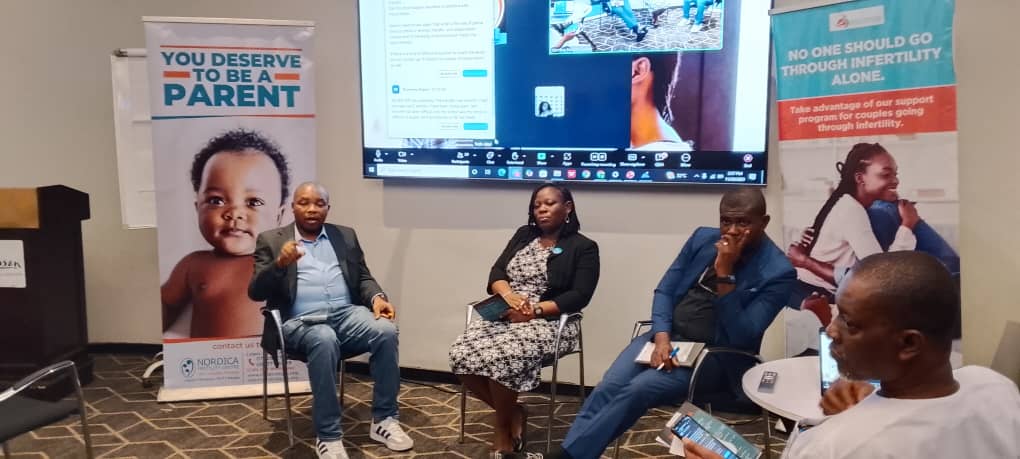
The panelists session. L-R: Dr Victor Ajayi, fertility specialist; Mrs Precious Balogun, Fertility Counsellor, and Mr Pillot Balogun, Psychologist, all of Nordica Fertility Centre, Lagos during the forum on failed IVF cycles organized by the Fertility Awareness Advocate Initiative (FAAI) held at the Radisson Hotel, Ikeja, Lagos, recently.
In Nigeria, where infertility remains heavily stigmatized, a new push for awareness and psychological support is gaining momentum. Fertility experts and advocates have called for a major shift in how Nigerians approach infertility care, stressing that IVF failures must be treated not only as medical events but as deeply emotional experiences requiring structured psychological support.
This emphasis formed the core of an insightful presentation delivered at a fertility awareness programme organized by the Fertility Awareness Advocacy Initiative (FAAI), where psychologists, fertility specialists, and couples gathered to confront one of the least discussed realities in reproductive health: the emotional damage caused by failed IVF cycles and the solutions available to help couples cope and try again.
FAAI, a support-oriented nonprofit, held the community outreach event in Lagos, aimed at confronting the painful realities of IVF failures — and highlighting the solutions available to intending parents.
The event, hosted with technical support from Nordica Fertility Center, Lagos, brought together couples who have experienced both successful and failed IVF cycles. The organizers said the programme was designed not just to educate, but to give participants a sense of power and belonging in their fertility journey.
Speaking, the Vice President of FAAI, Mrs Vivian Patrick, emphasized that infertility treatment, IVF in particular, can be emotionally, physically, and financially draining.
“The fertility journey is not a simple journey, it is a journey I have been through, and thousands have gone through it, that is why we decided to come together, to provide warmth, support, and a shoulder to lean on,” she said.
Patrick explained that FAAI is a growing support group consisting of individuals who have had successful IVF cycles, multiple failures, or are still waiting. The initiative focuses on breaking deep-rooted cultural myths about infertility, providing counseling, and improving public understanding of assisted reproductive technologies.
On why IVF failure is in the limelight, she said that across Nigeria, IVF failure remains a critical yet under-discussed issue pointing to high treatment costs, limited access, late presentation, and stigma having the tendency to deter many from seeking help early.
“FAAI believes that discussing these failures openly helps couples recognize that setbacks are not the end of the road, but part of a larger journey with multiple options. A lot of people know the options exist, but accepting and trusting these options is something else.”
Patrick stressed that awareness, counseling, and realistic expectations are essential in navigating failed cycles and preparing for next steps. She relayed the emotional highlights of a man who unexpectedly won a free IVF cycle through a raffle draw held during the groups event held in Abuja earlier in the year.
“He had been discouraged after multiple failed attempts and almost skipped the event due to an examination. He sat down looking sad, recounting how draining the process had been, the high cost, the failures, the disappointment. Then his number, 12, was called. The whole room erupted. It was as though hope came alive again.
“I was particularly elated because the coincidence of the winning number aligned with my birthday, December 12 making the moment even more personal for me. I know it will end in joy,” she said confidently.
“FAAI is committed to reshaping public narratives around infertility treatments. There is nothing wrong with IVF children, my 7-year-old son was born via IVF. He is brilliant, handsome, outspoken — perfect in every way. People need to stop believing myths.
“As IVF becomes a more accessible and discussed option in Nigeria, FAAI will continue pushing for awareness, regulatory compliance, and community-based support so that no couple walks the journey alone,” Patrick emphasized, proudly.
She stressed that membership of FAAI is open to individuals or couples who have undergone treatment with Nordica Fertility Center, whether successful or not. Counseling, peer support, and advocacy are among the benefits on offer with a strong focus on emotional resilience after failed cycles.
Psychological support after IVF failure
Addressing the audience, a Clinical Psychologist, Mr. Pillot Gbolahan, described infertility as one of the most misunderstood and underestimated emotional burdens in Nigeria.
“Society treats childbearing as automatic, something that should happen immediately after marriage. But when months turn into years, the questions begin, aunts asking ‘How far?’, neighbours whispering, and families assuming the problem lies with either the husband or wife. These questions sound casual, but they cut deep.”
“IVF failure is not just a medical result, but it is a form of grief. Couples mourn not only the loss of a pregnancy, but the loss of hope, identity, control, and sometimes dignity,” he avowed.
On why IVF failures hit so hard, the psychologist described infertility treatment as “one of life’s most challenging experiences”, saying “from studies, 50 percent of people going through infertility experience significant emotional distress, while depression rates range between 15–24 percent, and anxiety rates climb as high as 28 percent.
“These figures reflect real people, couples feeling inadequate, ashamed, or fearful that their lineage might end with them. In Africa, the pressure is even greater because women are often blamed while men internalize their pain, hiding shame behind silence.
“Marriages strain under finger-pointing, communication breakdowns, and the emotional exhaustion of repeated failure. Infertility can damage even strong relationships if emotional support is not included in the treatment plan,” he warned.
Role of stress
Highlighting research findings, Gbolahan explained that chronic stress releases hormones that can interfere with fertility treatment outcomes.
“Stress is not good for any human body, and in IVF treatment, it can significantly reduce success rates. One of the most stressful periods for couples is the 10–14 day wait after embryo transfer, 24 hours can suddenly feel like 96 hours. People check their bodies for imaginary symptoms, some test too early out of fear. The emotional tension is enormous.”
To help couples cope with IVF failures and prepare for future cycles, he recommended open, compassionate communication and shared responsibility.
“Partners should create safe spaces for expressing grief, anger, or confusion without judgment and without dismissing feelings. Fertility treatment is not a woman’s journey, men must be involved in appointments, decisions, emotional support, and treatment steps.”
On healthy coping habits, he prescribed proper sleep, exercise, healthy food, and relaxation practices that help stabilize mental health and reduce stress that may affect treatment outcomes.
“Couples experiencing persistent sadness, inability to function, social withdrawal, overwhelming anxiety or thoughts of self-harm should seek immediate psychological support. Seeking help is an act of strength, not weakness,” he stressed.
Also speaking on “The role of Counselling in Assisted Reproductive Technology / IVF”, a fertility counselor, Mrs. Precious Balogun, harped on the fact that infertility is not a private shame, but a medical condition for which solutions exist.
She shared accounts of the emotional storms that follow IVF treatment and the urgent need for psychological support for couples navigating repeated failure.
“Infertility is one of the deepest emotional wounds a person can carry and yet it is the one we hide the most, and IVF failure is grief. But just because there was no baby to hold doesn’t mean there was no baby to mourn.
“Infertility can make even the strongest marriages tremble. In Nigeria and much of Africa, childbearing is not just personal, it is a public expectation. People count how long you have been married, they calculate your ovulation for you, they offer unsolicited herbs, advice, and superstitions, yet behind every smile is a couple trying to stay afloat.
She spoke of the dreaded days after the embryo transfer — the 10 to 14 days that feel like a lifetime.
“People examine every sensation, a little cramp becomes a prayer, a drop of fluid becomes a fear. Some test too early out of panic, some refuse to test at all, terrified of seeing another negative line. But there is healing, and hope. You are not broken, you did not fail, infertility is not your fault.”
She explained how stress can affect treatment, why couples must talk openly, why men need to stand with their partners not on the sidelines.
“Sleep well, eat well, find small joys, and most importantly, seek emotional support. Sometimes healing requires a therapist, sometimes it requires a support group, sometimes it simply requires someone saying, ‘I understand your pain.’
“That is where groups like FAAI come in, giving couples a place to breathe, to cry, to share, to learn, and to hope again. Hearing someone say, ‘I’ve been there, and I survived,’ can save another person’s heart. An IVF failure does not mean the end of your story, it is just a chapter, you can rise again, you can try again, and you do not have to walk through this darkness alone,” she said.
Speaking further, she described IVF as “a journey filled with fear, anxiety, hope and disappointment,” a process that affects the body, but wounds the mind just as deeply. She explained that many people approach IVF expecting a strictly medical procedure, unaware that it is surrounded by emotional and psychological complexities, and sometimes spiritual pressures, especially within African families.
She said counselling is not an optional add-on but a critical part of the treatment. It guides patients before, during, and after IVF, offering information, emotional support, and clarity about expectations.
“For many couples, it becomes the only safe space where they can speak without judgement, cry without shame, and ask questions without fear.
The counsellor noted that IVF often triggers a mix of fear, guilt, pressure and uncertainty. “Patients worry about every stage: the first scan, the egg retrieval, the embryo transfer, and the silent, nerve-racking wait for pregnancy test results. Sometimes, fear makes you conclude on yourself before life gives you a chance.
“Counselling prepares patients mentally for procedures, especially injections. Many women dread needles but must learn to self-inject daily. Some face panic before routine checks, imagining the worst. Support makes the fear bearable, and people cope better when surrounded by those who understand the journey.”
Marital strain
She also highlighted the strain IVF can place on marriages. Because women undergo more visible procedures, many people assume men are unaffected. But men have their own fears ranging from poor semen parameters, pressure from family, and the silent expectation to be strong even when they are crumbling.
“Without counseling, couples often misunderstand one another’s pain. The process becomes filled with blame, resentment, or emotional distance. Counselling teaches communication, helps couples understand each other’s emotional needs, and encourages joint decision-making on issues like the number of embryos to transfer or when to attempt the next cycle.”
One of the strongest points she raised was the weight of past trauma.
“Many women fear starting IVF again because of previous miscarriages, failed treatments or lost pregnancies. Even those who achieve a positive result sometimes remain numb, unable to celebrate because they fear another loss. Counselling helps process painful memories so that past grief does not swallow present hope. Support is not just for women, men, too, need a place to express vulnerability, talk about pressure from family, fear of failure, or the shame that often keeps them silent. Counselling gives them a voice and teaches couples to face the journey as a team.
“When cycles fail, as they often do, counselling helps couples understand the reasons, cope with the grief, and decide when or whether to try again. When cycles succeed, it remains equally important, guiding women through anxiety in pregnancy and helping them bond with their babies after birth, especially those worried about postpartum depression or feeling detached after years of struggle.”
She emphasised the importance of long-term emotional wellness, adjusting to pregnancy, and preparing for delivery and life thereafter.
“Counselling also provides clarity on alternative paths such as donor eggs, donor sperm or frozen embryos, ensuring couples make informed, pressure-free decisions. You are never alone. Every person undergoing IVF, successful or not, needs support, someone to walk with them, someone to hold their hand through the tears, the uncertainty and the hope.
That is why groups like FAAI exist: to remind couples that even in failure, even in fear, they still have a community standing with them.
Why IVF cycles fail
In a presentation entitled: “Why IVF Cycles may fail”, a fertility specialist with Nordica Fertility Centre, Lagos, Dr. Victor Ajayi, explained the delicate science behind the procedure.
“Some cycles are better done frozen than fresh. In situations where a woman’s hormone levels are too high, transferring embryos immediately reduces the chances of success. Freezing them, allowing the body to recover, and returning in a calmer cycle can give hope another chance.
“The same applies to women with endometriosis – an illness that silently disrupts the uterus, making implantation difficult. For them, collecting eggs, fertilizing them, and storing the embryos before embarking on months of treatment is often the safest path.
“But science was only half of the truth. The other half, raw, painful, human, rested in the stories of women who had done everything right and still faced failure.”
Ajayi described how couples sell land, cars, even relocate across continents chasing hope. “IVF is often seen as the last hope. When it fails, it doesn’t just break the cycle. It breaks people. Understanding failure is so difficult, patients are told their embryos look ‘excellent’ yet no pregnancy occurs.
“People ask, ‘Why not one embryo? Why didn’t even one stay?’ They wonder if changing doctors or hospitals would help. But the truth is, even in the best centers in the world, IVF can fail.
“Science is delicate. Eggs and sperm must both be of good quality, they must meet, fertilize, and develop into genetically normal embryos. The lining of the womb must be receptive, like good soil waiting for a seed. Even when everything looks ideal, implantation may still not occur. IVF remains, in many ways, a miracle shaped by biology, timing, and chance.”
As part of the forum, one lucky subscriber emerged the winner for a free IVF cycle through an electronic spin-the-wheel selected. Four other lucky persons were randomly picked from the hall and from the online participants. It was a moment of levity in a gathering built on stories of pain and perseverance.
Do your due diligence
In the view of the Medical Director/CEO Nordica Fertility Centre, Lagos, Dr Abayomi Ajayi, “Do your investigation about IVF centres with due diligence, don’t rely on casual sources, you need to crosscheck the facts. It is important for us to keep searching and not be lazy. Some patients are given information about side effects, but doctors don’t always put that in writing or explain it clearly.
“Don’t give anyone the right to control your life. Science depends on integrity, that’s the way to get reliable information, it’s better to search based on evidence, not just opinion. That’s why you need to know what real research looks like, you need to investigate, not just accept information blindly. Don’t take anything as 100 percent proven without checking.
“I usually tell clients: your right as a patient is to ask questions, even if they seem silly. If you don’t, you’re not being fair to yourself, no matter the question, ask, even if you’re unsure, cross‑check. And as I always say, because I’m in the medical space, experience matters. What you will see from experienced professionals is invaluable.
“Another thing is to avoid unnecessary risks. Experienced doctors know the chances, they know the possibilities. But many medical centers don’t always give patients the full picture, that’s why you need to find out not just the name of a clinic, not just the cost. It might be expensive but even if you have doubts, ask around, and if it’s based on referral, remember that referral doesn’t necessarily mean validation, it doesn’t guarantee quality.
“When in doubt, ask the doctor. Without reliable guidance, the path to parenthood through IVF risks being overshadowed by confusion, fear, and mistrust.
He said the best clients are those who ask questions even the simplest, most exhausting questions. Counselling shows there is always a choice, but not trying is as bad as failing.
“The goal of all this is that at the end of the process, you want to have a child. If you lose focus on the goal and start chasing other things, you won’t get the result. When you start to force the little things, trying to micromanage, trying to push too hard, it becomes counterproductive.
In wrapping up, couples were admonished: “Hearing from someone who has walked the same path gives hope in ways no clinical advice can. No one should face infertility alone. IVF failures do not mean the end of the road but they do require emotional healing, resilience, and guided support.
“Infertility affects the whole quality of life. Some people stop living altogether until a pregnancy happens, but no one should face this journey alone. Psychological support is not optional, it is essential.”
It was unanimously agreed that groups like FAAI provide one of the strongest forms of emotional protection for couples. They called for empowerment through psychological support as vital in the journey of fertility treatment, particularly in the face of a failed cycle.